
Author: Rebecca Mowat

  • Career Transition:  Taking back control after job loss

    Career Transition: Taking back control after job loss

    “You have brains in your head. You have feet in your shoes. You can steer yourself any direction you choose. You are on your own. And you know what you know. And you are the guy (or gal!) who’ll decide where to go.” 

    These are the immortal words of one of my favourite authors and philosophers, Dr Seuss. They are words I have personally lived by and ones I share with everyone I’ve coached through career transitions.

    But after losing a job – whether through redundancy or otherwise­ – putting yourself back in the driving seat can be a lot easier said than done. Here is how we begin that process.  
     

    Overcoming the ‘lurking saboteur’ 

    It’s a very human reaction to experience self-doubt after losing a job.  Our brains are wired to focus on the negative first.  Negative self-talk and worry about the future are all very normal, especially when change feels forced upon us.  

    Soldiering on without addressing these negative emotions can lead to them resurfacing later and hampering progress. Talking through these emotions is critical rather than keeping them like a ‘lurking saboteur’ inside your head.  

    Accept you are human and that you need a minute to process the negative stuff.

    Re-establishing your sense of self 

    Job loss can be a real knock to your identity. Most people focus first on what they need to improve or what they lack. I believe that focusing first on what you know and like about yourself provides a much stronger base. You’re ‘weaknesses’ then become things to work on rather than showstoppers.   

    Listening to the angel on your shoulder   

    Take a moment to reflect on positive feedback you’ve received throughout your career. Whether it was a formal review or a passing comment like, “I really liked the way you handled that,” write those moments down. Look objectively at what they say about you and your strengths.  

    This is what you actually project to others. These strengths act as a valuable ‘angel on your shoulder’ to balance out the noisy inner critic.  

    One of my favourite pieces of feedback was when a manager said to me: “No one dies in a ditch wondering what you are thinking.”  For me, that was a positive reinforcement of my values: being open, candid and authentic.  

    Reflect on what brings you joy  

    We spend a large percentage of our waking hours working. So, it should bring us some joy and satisfaction.  Reflect on when you’ve felt ‘in the zone’, where time flies and you feel pumped when the task is done.

    If we can ‘stack the deck’ in favour of the work we actually enjoy, we feel much more in control of our destiny and happiness. What are the specific tasks that make you feel steady, capable and satisfied?

    Thinking outside the ‘sandpit’ 

    When you’ve spent years in one industry or specific role, it’s hard to see beyond it.

    We can be like the proverbial mouse on a wheel unable to think objectively and simply chucking ourselves back into the same ‘sandpit’. 

    This is where career coaching adds value.  We guide you through a process of self-reflection, focusing on your ‘superpowers’ and then help you expand your thinking to alternative options that you may never have considered on your own.  

    Overcoming barriers 

    And a final note.  The job market is incredibly tough now.  Not only are we contending with inherent human biases but also dehumanising approaches too. AI recruitment filters and rejections are on the rise and can be hugely demoralising. Support to stay on track despite the obstacles, and try new approaches, can be a game changer.   

    What brings me joy is coaching individuals to help them develop their sense of self and agency of their own lives and careers. If you are interested in knowing more about ClearWay’s career coaching programmes reach out to Rebecca Mowat or phone 027 807 1533. 

  • Mediation: The case for early intervention

    Mediation: The case for early intervention

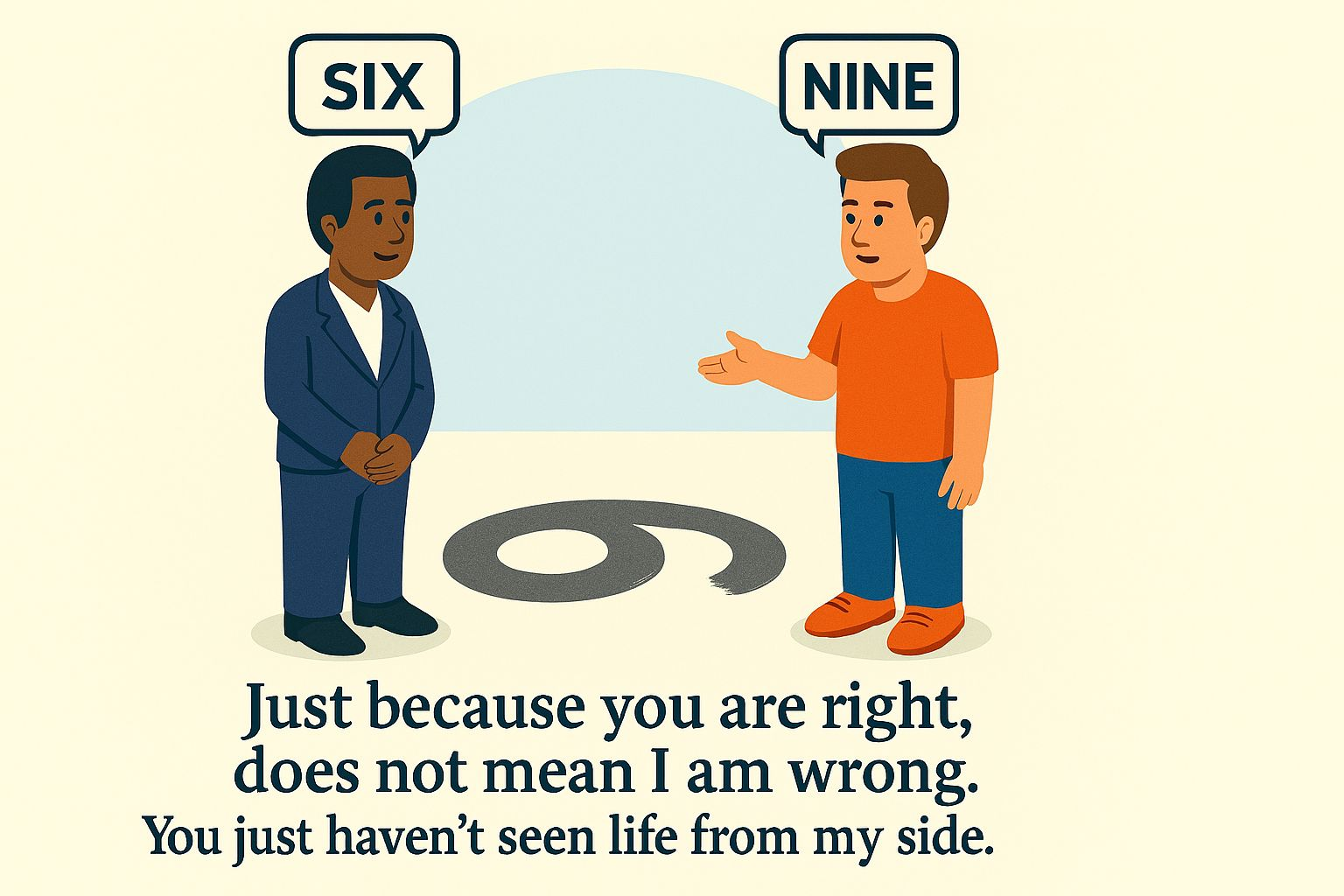
    One of the most important goals of facilitated conflict resolution is helping people make a fundamental shift in perspective.

    It is the move from clinging to a personal ‘position to seeing the other party’s point of view. 

    In the world of dispute resolution, this is the ‘corner-turning’ moment. It’s the point where parties stop looking backward at the grievance and start looking at an agreed way forward. 

    Why we struggle to see the ‘other side’ 

    The answer lies in neuroscience.  When we are in conflict, most of us instinctively struggle to see beyond our own point of view. This isn’t a character flaw; it’s a very human self-protection position deeply rooted in our primitive ‘fight or flight’ brain.

    Each person naturally sees the issues through their own intersection of facts, feelings and perceptions. Moving past this requires shifting control back to our conscious ‘reasoning’ brain.  That shift is pretty hard to do alone, which is exactly where a neutral third-party mediator creates value.  

    Steadying the room

    Mediation isn’t just a conversation. It’s a structured process designed to create a neutral space, where parties in conflict can be heard and understood and listen and take in the other’s perspective. The role of the mediator is to balance power dynamics, manage the heat in the room and ask the right questions to facilitate that mental shift.  

    There are three distinct phrases:

    The Mediation Roadmap

    Exploration and understanding

    Individual meetings followed by facilitated joint discussion. This is where we go below the surface to explore the issues in depth and uncover the real interests and perspectives of everyone involved. 

    Problem solving and resolution 

    Once the issues are understood and interests are uncovered, we move to joint idea generation. Options are tabled, negotiated and filtered until we find a resolution all parties are committed to. 

    Implementation   

    We don’t leave it a ‘handshake’. We create a documented commitment of agreed actions, including exactly how and when they will be carried out. 

     Building a fence at the top of the cliff  

    If conflict isn’t addressed, these corners we stand in only become more entrenched. The scale of the dispute escalates, and the psychological wall gets higher.

    In the workplace, unaddressed tension leads to major breakdowns in communication and productivity. At its worst, it can result in bullying complaints, resignations or personal grievances. 

    Early intervention mediation acts as the fence at the top of the cliff rather than an ambulance at the bottom.  By having a mediated discussion early, you can stop the escalation and address the issue safely and openly before it becomes the ‘elephant in the room’ and impacts work and relationships.

    Ending the war

    Many issues can be solved by simply helping people move out of their own respective corners. Mediation is about finding solutions together, rebuilding relationships, and ending the war. This is the beauty of the process.  

    Ready to find a way forward? 

    If you would like more information on how Clearway’s mediation services can help resolve a dispute or conflict in your workplace, reach out to Rebecca Mowat or phone 027 807 1533. 

    ClearWay also provides post mediation coaching support to help individuals and teams cement change and ensure it sticks. 

  • Why self-awareness and small moments matter

    Why self-awareness and small moments matter

    The ultimate goal of great leadership is to create an environment where your team can perform, succeed and thrive.    

    When you are a leader, you are automatically in the spotlight. Even though your primary role is to enable others, the team takes cues from you. Usually, it’s the small moments that matter most.  This spotlight only gets brighter the higher you climb, as your influence sets the tone for an even bigger group of people and, possibly, the whole organisation.   

    Psychological safety is the foundation for team performance 

    Google’s ‘Project Aristotle’ – a landmark study on high-performing teams – found that the most successful groups weren’t defined by brains or seniority, but by psychological safety.

    Teams that feel ‘safe’ to express their opinions, take risks and be vulnerable with each other are more productive and innovative. In short, psychological safety is the foundation for team success. 

    So, what’s the leader’s role in creating psychological safety? In my experience, this starts with how a leader “shows up”‘ in the small moments, being candid, asking for input and being willing to show vulnerability first.   

    How you show-up – small moments matter 

    Leaders are human. You are often balancing heavy workloads and immense pressure. In that environment, it is incredibly easy to forget that small human engagements matter.

    However, these interactions are critical for setting the tone. Psychological safety cannot be built through workshops or team building exercises, it happens in the small moments when you:

    • Offer a simple, genuine “hello” in the morning before rushing into meetings
    • Use ‘watercooler’ moments to engage in conversations about life – the kids, weekend activities, or holidays
    • Being available for informal check-ins throughout the day rather than relying on scheduled meetings like one on ones. 

    The power of candid communication 

    How do you talk to your team about what’s happening in the wider business?  Do you wait until the “key messages” are perfectly refined and deliver them like a State of the Nation address? Or do you weave insights and information into day-to-day conversations? 

    The latter is far more effective. It gives your team the information they need to succeed while ensuring they don’t feel they’re operating in an information vacuum. When you share early and often, you signal that you trust them. 

    Role modelling vulnerability 

    If you want your team to feel safe taking risks, you have to lead the way. I’m a firm believer that leaders must role model vulnerability themselves.  

    Admitting when you don’t have the answer, being open about your blind spots, or asking for a sounding board are powerful actions.   If you feel the need to project an image of total competence in every area, you are unintentionally setting that same impossible standard for your team.  This reduces the likelihood that they will ask for help when they need it most.

    Remember, you a human being with flaws alongside your strengths. Admitting that isn’t a weakness, it’s an invitation for your team to do the same.  

    Your leadership brand is built by action

    Leadership branding isn’t about what’s in your head, it’s about what people see you do.  

    In my own leadership journey, it was important to me that I wasn’t seen by people as an “unobtainable” senior leader. I wanted people to feel safe sharing their challenges and successes with me. I had to match that aspiration with deliberate actions: walking the floor, having informal chats, talking regularly with my team, making time for whomever needed it and being open when I needed help.   

    Here’s some homework: Ask yourself what are the hallmarks of how you want to be perceived as a leader? Are your daily actions reflecting this? 

     Need a sounding board?

    If you want to improve the psychological safety in your team, build a deliberate leadership brand and enable higher performance, Clearway coaching can help.  Contact Rebecca Mowat or phone 027 807 1533. 
  • Why you can’t afford NOT to delegate

    Why you can’t afford NOT to delegate

    The move into a leadership role involves a fundamental shift in how work gets done – from delivering work yourself to delivering work through others. 

    As a leader, how many times have you thought:

    • “I don’t have time right now to delegate this to one of my team, I’ll just do this myself.”
    • “This work is important to get right, I can’t invest the time to train someone right now.”  
    • “This task is tedious I don’t want to lump my team with crappy work.” 

    If these thoughts sound familiar, you aren’t alone.  But, if they are your daily drivers, then you are doing yourself – and your team – a massive disservice. You’re hitting a ceiling on your own productivity and denying your team the opportunity to grow. 

    The ‘too busy’ paradox

    I’ve coached many leaders who feel there is never enough time in their week. Bouncing from meeting to meeting, squeezing in desk time to do ‘actual’ work, taking work home or staying late and constantly running to keep up are typical features of many leaders’ weeks. 

    Unfortunately, this “tyranny of the immediate” has consequences.  Working late nights or weekends impacts your health, wellbeing and personal relationships. While delegation isn’t a magic panacea, it is a critical lever for reclaiming your time and fuelling your team’s development.  

    Yes, it takes time investment in the short term but the payoff in the long term is exponential.

    Shift from ‘expert’ to ‘enabler’

    Most leaders transitioned from being highly competent ‘experts’ in their field to leading a team that does the work. As an expert, you were in total control of the process. As a leader, you have to let it go.

    I know this first-hand from my career in HR. Like most experts, I was particular about approach, quality and output. When I moved into leadership, I had to work very deliberately on shifting my mindset from “I’m in total control of what gets done” to “My role is to guide others to deliver well.”

    This requires a deliberate choice to trust your team and shift your focus to the actual mahi of leadership – supporting others to grow.

    The Three Pillars of Great Delegation

    1. Invest Time Upfront, Create Some White Space: Delegation fails when it’s a “dump and run” in the two minutes between meetings. Great delegation requires you to pause and create “white space” in your diary to think. You need time to plan the big picture and articulate the why and the what clearly. If you take the time to frame the project well, you set your team up for success.

    2. Focus on Outcomes, Not Methods:  As an expert, you’re used to controlling the how. As a leader, you must let that go. A fundamental mindset shift is needed: move from “I’m in control of what gets done” to “my role is to guide others to deliver well.” This means setting expected outcomes and timeframes, then deliberately trusting your team to control the approach and the execution.

    3. Be a Sounding Board, Not a Hawk: Many leaders struggle to step back, instead “watching like a hawk” from the sidelines—which is just micromanaging by another name. Once you’ve communicated the desired outcomes, your role must transition. By stepping back to be a mentor and a sounding board, you provide a safety net for your team to grow their own capability without feeling hovered over.

     And once you get this right, I can guarantee that you will free up time in the long run and grow the skills and capability of your team.  

     If delegation is your ‘Achilles heel’ as a leader and you need help making the shift then Clearway coaching can help.  Contact Rebecca Mowat or phone 027 807 1533. 

  • Difficult Conversations – why are they so hard for leaders?

    Difficult Conversations – why are they so hard for leaders?

    Many people leaders struggle with having difficult conversations with their direct reports.  

    Whether the discussion is simply a chat raising improvement related feedback or addressing a more significant conduct or performance issue, difficult conversations can often be relegated to the ‘too hard basket’.

    This delay often means issues escalate, turning a manageable feedback session into a more major issue or conflict.

    So why is this a common challenge facing people leaders? 

    Is it a lack of training in how to have these conversations or are there more deep-rooted psychological causes that need to be addressed first? 

    New Leaders – the challenge of being promoted from inside the ranks  

    For new leaders the sudden requirement to be in the ‘hot seat’ of these conversations can seem like a huge mountain to climb and can cause them to question the decision to take on the role.

    Navigating the change is often significant and pretty lonely for new leaders especially if they are not adequately supported.

    Negative thoughts can dominate and become a big barrier to both enjoyment of the new role and leadership success. 

    • “I’m still me, but do they trust me or just see me now as management?”
    •  “Will my former teammates still like me as a person?”
    • “How do I navigate being friends outside of work with someone who was my teammate, but now I’m their boss?” 

    These are all real thoughts that newly promoted leaders experience, particularly when dealing with the tough side of leadership – the difficult conversations.   

    Often new leaders are promoted from within the team.  While this is admirable from a company hiring policy perspective, the sudden transition from being a teammate and friend to being the boss is tough.  

    Almost always it is psychological barriers – not a lack of training or know-how– that must be addressed first.

    Common psychological barriers regardless of experience level 

    It’s not just new leaders who find leaning into difficult conversations confronting. 

    In my experience as a coach, I’ve worked with many leaders who struggle with difficult conversations regardless of their experience and irrespective of the journey taken to get to that role.  

    Not wanting to be disliked as a person, worry about mishandling a conversation and causing distress, concern that a step too far will result in a complaint or, at it’s worst, a personal grievance. 

    Any paralysis at this point minimises the opportunity to have those early conversations potentially exacerbating whatever is developing. This means the avoided difficult conversation pushes the needle closer to what will seem like an impossible conversation.

    So what’s the solution to overcoming these barriers? 

    It will be different journey for everyone, but what is always true is that it’s not just about training.

    You can only get better if you deal with any underlying fears then lean in and actually have the conversations.  

    Helping leaders move past their unique psychological barriers and face into the task with courage and positive intent is my mission as a coach. If internal barriers aren’t confronted first, the lingering fear overtakes any positive intention and minimises the value of any training. 

    While all leader’s ‘mind’ barriers are unique to them, there are a couple of key concepts that are helpful to many I’ve coached.   

    Emotional bank accounting  

    The concept of an emotional bank account was introduced by Stephen Covey in his book “7 Habits of Highly Effective People’. 

    The premise is simple: trust is built through consistent ‘deposits’ (positive interactions) that provide a buffer for the ‘withdrawals’ (difficult conversations) that leadership inevitably requires.

    Leaders always have opportunities to make deposits in their ‘emotional bank’ as they develop relationships with their direct reports. That positive balance in the ‘bank’ creates a stronger relationship platform when it feels like a withdrawal is being made by having that difficult conversation.

    There’s more trust, more balance – and much less doom and gloom from either side of the table.

    Simple actions like:

    • openly and regularly communicating
    • taking time on a Monday morning to ask about the weekend
    • noticing when things go well and giving positive feedback, or 
    • simply saying thank you for work well done

    These are all deposits that build the positive side of the ledger to keep the relationship in ‘credit’. 

    Reframing the conversation by focusing on positive intent 

    If a difficult conversation is framed negatively in a leader’s mind such as ‘I’m delivering bad news, I’m punishing for something wrong’ etc then that’s generally how the conversation will feel and can lead to it being put in the too hard basket and delayed. 

    Focusing on the positive intentions behind raising a difficult piece of feedback flips this on its head. 

    Why is it important to give this feedback?  What would you truly like to see in terms of improvement, learning, behaviour change and how will this benefit your direct report?

    Most leaders want to see their people succeed and reach their potential. 

    Addressing areas of improvement or behaviour that is causing barriers to someone achieving their potential is helping them put their best foot forward.  

    Side by side feedback: Focus on the issue not the person  

    In my long career as both an HR professional and a leader of people, I have had to have plenty of difficult conversations.

    One of the most powerful shifts I have taken forward with me is the shoulder-to-shoulder approach. Instead of sitting across the desk – which creates a confrontation ‘me vs you’ dynamic – imagine standing together, looking at the problem on the table.

    You aren’t attacking the person; you are both addressing the issue.

    In summary, if you are a leader struggling with this aspect of people management – you aren’t alone, and you’re very human.

    Moving past psychological barriers to lead conversations with courage and positive intent will set you up for success.  

    If you are interested in knowing more about Clearway’s leadership coaching programmes reach out to Rebecca Mowat or phone 027 807 1533.   

  • Personal issues impacting work

    Personal issues impacting work

    Finding the balance between care and support and managing performance concerns 

    In recent years, I have observed a growing challenge for people leaders – how and where to find the balance between care and support for employees facing personal difficulties and dealing with impacts on performance in the workplace.

    In my experience, this dilemma became acute during the Covid lockdown period where work and home-life became much more integrated and leaders focused on maintaining connection with their team members who were often facing new or amplified personal  wellbeing challenges.   

    Over my 30 year HR career, the vast majority of people leaders I have encountered have been inherently compassionate humans who genuinely care deeply about their people. And when a team member is facing family challenges, mental health fluctuations or other personal wellbeing challenges, most leader’s first thought is ‘how can we support this person’.  Person first work second.  Commendable, deeply human and critical to building a culture where employees are valued and feel safe.  

    But what about when personal issues start to impact work performance, work attendance or spill over into challenging behaviour in the workplace?  This is the dilemma I have seen manager’s face time and time again – how to balance being a caring and compassionate leader with dealing with the impact on performance at work. Where is the line? When is enough support enough particularly when performance impacts are starting to be felt by the wider team?    

    Every one of these situations are unique in my experience.  Here are some starting points: 

    • Start with the big picture:  How has this person typically performed over their employment with the company?  If they have typically been a good performer but their personal issue has caused a dip , helping them get back on track by providing support, care and time off may be the best management investment. Conversely if performance and or attendance has been variable from the start of their employment then more decisive action may be required to manage ongoing performance concerns.   
    • Understand the impact on the team: How are others feeling in terms of care for the person experiencing personal challenges.  Be mindful of perceptions of fairness  and psychological safety when drawing the line between caring and support and managing performance issues.  
    • Are others picking up the work?  How is this impacting stress levels of other team members? What’s the general team sentiment – mucking in to support a colleague or feeling overburdened as it’s been going on for too long? Have a check in conversation with the team (conversation starters).  
    • Reflect on your own tendencies – am I avoiding dealing with this issue because it’s easier?  How is this impacting my leadership brand?  
    • What are stakeholders outside the team noticing?  Customers, other departments, your leader etc.  
    • Get professional advice before acting – there are often multifaceted legal issues to consider.  Mental health and duty of care, medical incapacity processes, family violence, human rights.